
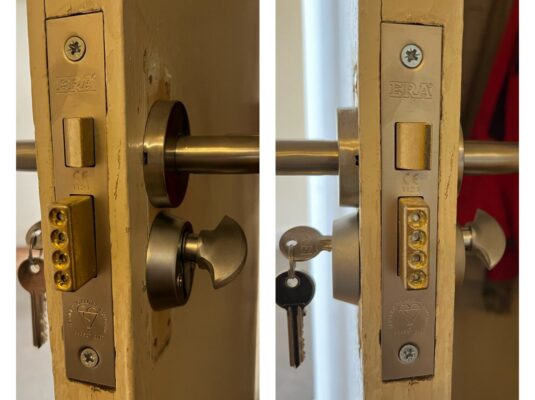
Fire Safe Locks for Flats and HMO Properties in London: A 2026 Landlord Guide
Your insurance company wants your HMO front door double-locked, but your fire inspector will hand you a £5,000 fine if a tenant needs a key to escape a blaze. It’s a frustrating paradox that landlords across Tower Hamlets and Hackney face every single day. You want to keep your property secure from intruders, yet you can’t risk lives or legal action by blocking a primary exit route. You’re likely tired of conflicting advice that leaves your building vulnerable and your pocketbook at risk of heavy borough council penalties.
This guide simplifies the confusion surrounding fire safe locks for flats and HMO properties UK by showing you how to meet 2026 safety standards without compromising on security. We’ll explain the mechanics of keyless egress, recommend specific British Standard hardware, and show you how to stay compliant with local regulations. As a family-run, MLA-approved shop based at 143 Bow Road, London, E3 2AN, we provide the steady, professional reassurance you need to secure your multi-occupancy building properly. You’ll learn how to satisfy the inspectors and the insurers in one move.
Key Takeaways
- Understand why standard residential locks are often illegal in multi-occupancy buildings and how to identify compliant fire-safe mechanisms.
- Learn how thumb turn cylinders provide the essential balance between high-security protection and immediate, keyless exit during a fire emergency.
- Master the difference between BS3621 and BS8621 standards to ensure your fire safe locks for flats andHMO properties UK meet both insurance and legal safety criteria.
- Use our professional landlord checklist to conduct a thorough door-by-door audit and eliminate hardware risks before your next property inspection.
- Get expert advice from our MLA-approved locksmiths at 143 Bow Road, London, E3 2AN, to secure your Tower Hamlets or Hackney property correctly.
What are Fire Safe Locks for London Flats and HMOs?
Fire safe locks for flats and HMO properties in UK are specialised security components designed to balance building security with life-saving accessibility. Unlike the standard locks found in a single-family house, these mechanisms must allow for immediate exit without the use of a key. This principle is known as "keyless egress." The Regulatory Reform (Fire Safety) Order 2005 mandates that all London landlords ensure escape routes are effective. If a tenant is trapped behind a locked door because they cannot find their keys during a fire, the landlord is legally liable.
Compliance often involves installing thumbturn cylinders or non-deadlocking night latches that meet British Standards. These devices ensure that while the door remains locked to outsiders, anyone inside can get out with a single, simple movement. At London Locks, located at 143 Bow Road, London, E3 2AN, we exclusively supply and fit hardware that adheres to Fire door regulations. Using the wrong hardware can lead to the door warping or failing to latch under high temperatures, which allows fire to spread faster between compartments.
The Higher Risk Profile of Multi-Occupancy Buildings
Shared escape routes in London blocks and HMOs carry a significantly higher risk profile than private dwellings. In a fire, the "Panic Factor" is a documented psychological state where individuals lose fine motor skills. Searching for a key to unlock a front door becomes nearly impossible in a smoke-filled hallway. Data from fire safety inspections in 2023 indicates that roughly 30% of HMO failures in East London relate to non-compliant locking hardware. Landlords failing these checks face unlimited fines or prosecution. We provide landlord locksmith assistance London to ensure your property meets the latest 2026 safety benchmarks without delay.
HMO vs. Single Family Home Requirements
The legal requirements for locking a door change the moment a property is classified as an HMO. In a standard home, a double-sided deadlock is a security asset. In an HMO, that same lock is a death trap. Internal bedroom doors must provide security for the tenant but must never require a key to exit. Communal entrance doors are the most critical failure point we see. These must be fitted with fire-rated electric strikes or mechanical thumbturns to ensure every occupant can get out. You can identify non-compliant locks by checking for a keyhole on the internal side of any final exit door. If a key is required to get out, the lock is illegal. Visit us at 143 Bow Road, London, E3 2AN to see compliant alternatives. We are MLA approved and offer a no call-out charge policy for all local safety assessments.
The Thumb Turn Rule: Balancing Security and Safety
Fire safety in London rentals isn’t optional. Thumb turn cylinders are the gold standard for fire safe locks in flats and HMO properties UK. These locks feature a standard keyhole on the outside and a simple turn-knob on the inside. In a fire, seconds save lives. You can’t afford to have tenants fumbling for keys in a smoke-filled hallway. The Approved Document B guidelines make it clear that exit routes must be easily operable without a key. If your property still uses double-cylinder locks that require a key to exit, you’re likely in breach of current safety standards.
Some landlords worry that thumb turns are less secure. They fear a burglar might smash a side window and reach in to turn the knob. This is a common security myth that we address by installing high-security, Anti-Snap cylinders. These locks are designed to snap at a sacrificial point, keeping the internal locking mechanism intact even if the outer part is attacked. Look for the 3-star Kitemark rating and BS EN 1303 certification to ensure your property meets the highest British Standards. We don’t cut corners on safety, and neither should you.
Internal Bedroom Doors in HMOs
HMO regulations require every individual bedroom door to facilitate a quick escape. A thumb turn lock allows a tenant to lock their door for privacy while ensuring they can exit instantly during an emergency. To manage access for inspections or maintenance, we recommend integrating master key systems in London. This gives you one master key for every door in the building while your tenants only have access to their specific rooms. It’s the most efficient way to balance tenant privacy with landlord emergency entry requirements.
Communal Exit Doors and Final Exits
The main front door of a block of flats is your final exit. It must never require a key to open from the inside. We often install electric strikes or mag-locks that integrate with the building fire alarm system. If the alarm triggers, the door releases automatically. Deadbolts that require a key from the inside are strictly prohibited and will fail a fire safety inspection. Our team at 143 Bow Road, London, E3 2AN sees these dangerous setups far too often. We can help you swap them out for compliant hardware that keeps you on the right side of the law. If you aren’t sure if your current hardware is legal, you can book a professional lock fitting assessment today. We provide clear advice and fixed pricing so you can secure your property without any hidden fees.
British Standards and Insurance Compliance for Landlords
Security and fire safety often pull in opposite directions. Your insurer wants the property bolted shut with BS3621 deadlocks. The fire marshal wants every tenant out in seconds without searching for a key. For fire safe locks for flats and HMO properties in the UK, the solution lies in BS8621. This standard mirrors the security of BS3621 but features a thumbturn on the inside. It allows for "keyless egress," meaning tenants can escape a fire even if they’ve misplaced their keys. Balancing these requirements is a legal minefield for London landlords. Following London Fire Brigade guidance on landlord responsibilities ensures you don’t fail a safety audit or invalidate your insurance policy.
Choosing the wrong hardware leads to failed Fire Risk Assessments (FRA) and potential fines. You must install locks that satisfy both the fire inspector and your insurance provider. We recommend using MLA-approved locksmiths to survey your property. A professional assessment identifies exactly which doors require thumbturns and which can remain on standard deadbolts. It’s about life safety first. If a tenant is trapped because of a deadbolt, the liability sits with the landlord. We see this mistake often in East London conversions. Don’t risk it.
TS007 3-Star Ratings for HMO Properties
London burglary statistics remain high. Lock snapping is the most common entry method in boroughs like Tower Hamlets and Newham. To combat this, 3-star TS007 cylinders are the minimum requirement for fire safe locks flats HMO properties UK. These cylinders are designed to snap at a sacrificial point, leaving the internal mechanism intact and locked. For HMOs, we often install high-security EVVA EPS or ICS systems. These provide patented key protection, meaning tenants can’t get keys cut at a local booth without your permission. You maintain total control over property access while ensuring every door meets fire escape standards.
Documentation and Certification
A fire inspector won’t just take your word for it. They need a paper trail. Every lock installation or maintenance check should be recorded in your property logbook. This documentation is a vital part of your Fire Risk Assessment. When you use professional lock fitting services, you receive an invoice and certification that proves the hardware meets British Standards. Visit our shop at 143 Bow Road, London, E3 2AN to see the physical difference between compliant and non-compliant hardware. Having a dated receipt from a Master Locksmith is your best defence during a property audit or an insurance claim. It proves you’ve taken "reasonable steps" to secure the building and protect your tenants.

How to Organise and Install Fire Safe Locks: A Landlord Checklist
Compliance isn’t a suggestion; it’s a legal mandate for 2026. Installing fire safe locks in flats and HMO properties in the UK requires a methodical approach to ensure every exit remains a viable escape route. Don’t guess with your tenants’ lives or your legal liability. Follow this professional checklist to bring your property up to standard.
- Conduct a door-by-door audit: Walk through the property and inspect every single locking mechanism. Identify any deadbolts or night latches that require a key to open from the inside. These are immediate fail points in a fire inspection.
- Consult an MLA-approved locksmith: Bring your floor plans to our shop at 143 Bow Road, London, E3 2AN. We’ll help you specify hardware that meets BS EN 179 or BS EN 1125 standards.
- Replace cylinders with thumb turns: Every internal bedroom door in an HMO and the final exit door of a flat must have a thumb turn cylinder. This allows for immediate escape without searching for keys in a smoke-filled room.
- Test Keyless Egress: Physically operate every thumb turn. Ensure the bolt retracts fully with minimal effort. If a door is dropped or warped, the friction could prevent a child or elderly tenant from escaping.
- Educate your tenants: Provide a written guide during the move-in briefing. Explain that while the door locks automatically for security, the thumb turn is their primary fire escape tool.
Hardware Selection and Key Management
Managing a multi-unit property is easier when you simplify your pockets. We recommend key-alike systems to allow one key to open a tenant’s front door, bin store, and communal entrance. This reduces confusion during emergencies. To maintain strict security, use restricted key profiles. These prevent tenants from getting unauthorised duplicates made at high-street kiosks. If you need precision key cutting in London for high-security cylinders, our Bow Road team handles this while you wait, ensuring every spare works perfectly the first time.
Maintenance and Testing Schedules
Fire safety isn’t a "fit and forget" task. Set a recurring calendar reminder for 90-day inspections. Dust and grime build up in London properties, causing thumb turns to become stiff. Apply a graphite-based lubricant to the cylinder every six months; never use WD-40 as it attracts grit that jams fire-rated ironmongery. If a door begins to drag on the frame, it puts pressure on the lock bolt, making it harder to turn. When things feel sluggish, it’s time for a professional security health check to ensure your hardware remains 100% compliant and functional.
Professional London Locksmith Solutions for HMO Landlords
London property managers face strict regulations. Keeping fire safe locks for flats and HMO properties in the UK compliant is a 24/7 responsibility. We understand the pressure. London Locks has served as the Expert Guardian for East London since 2005. Our team focuses on Bow, Hackney, and Tower Hamlets. We don’t just fix doors; we secure your investment. We use e-cargo bikes to bypass heavy London traffic. This ensures a rapid response that’s also eco-friendly. It’s about getting to your property fast when a tenant is locked out or a fire door fails. We provide dedicated landlord assistance to help you navigate the latest 2026 safety standards without the stress.
Expert Guardian Service in East London
Tailored Security for Modern London Living
Every building has unique needs. In early 2024, we completed a project for a multi-storey block in Hackney. The landlord needed to meet updated fire compliance for 15 individual units. We installed high-security thumbturn cylinders to ensure safe egress. We also integrated smart locks with fire alarm overrides. This setup ensures that doors unlock automatically if the building’s fire alarm is triggered. It’s a sophisticated solution that balances modern convenience with life-saving functionality. To complement your security hardware, you can learn more about National Fire Ltd for specialist fire door installation and passive fire protection across the UK. We provide clear, fixed pricing so you can manage your maintenance budget effectively. Ready to secure your property? Contact us for a comprehensive fire-safe lock audit. We’ll make sure your fire safe locks for flats and HMO properties in the UK are fully compliant and ready for inspection.
Secure Your London Property for 2026 and Beyond
London landlords can’t afford to get fire safety wrong in 2026. You’ve seen why thumb turn cylinders are vital for emergency exits and how British Standard EN 1303 locks keep your insurance valid. These aren’t just recommendations; they’re the difference between a safe home and a legal nightmare. London Locks has been a family-run fixture at 143 Bow Road, London, E3 2AN since 2005. We’re MLA Approved Locksmiths who understand the specific pressures of the East London rental market. Our team provides the precision your property requires with a transparent No Call-Out Charge policy. We’ll help you secure your **fire safe locks **requirements quickly and professionally.
Protect your tenants and stay compliant; book a fire-safe lock audit with London Locks today
Get your security up to scratch before the next inspection cycle begins. We’re ready to help you protect your tenants and your investment with expert care.
Frequently Asked Questions
Do I legally need thumb turn locks on all HMO bedroom doors?
Yes, you legally need thumb turn locks on all HMO bedroom doors to comply with the Regulatory Reform (Fire Safety) Order 2005. Tenants must be able to exit their rooms during an emergency without searching for a key. We install these daily across East London to ensure landlords hit the 100% compliance rate required by local councils. It’s a simple hardware swap that saves lives and prevents heavy fines during your annual inspection.
Can I use a standard BS3621 mortice lock on a fire exit door?
No, you can’t use a standard BS3621 mortice lock on a final fire exit door. These locks require a key for egress, which violates UK fire safety building regulations. You must install a BS8621 lock instead. This standard ensures the door stays secure from the outside but allows immediate exit from the inside via a thumb turn. Using the wrong lock can lead to a £5,000 fine per door during a safety audit.
What happens if my insurance requires a key-operated lock but the fire officer says no?
Fire safety law always takes precedence over insurance requirements in the UK. If a fire officer demands a thumb turn for a safe exit, you must comply regardless of your policy’s wording. Most insurers now recognise BS8621 fire safe locks flats HMO properties UK as a valid alternative to BS3621. We can provide the technical documentation to satisfy your insurer while keeping you on the right side of the law and the fire brigade.
How often should I test the fire safe locks in my London flats?
You should test the fire safe locks in your London flats at least once every month. Check that the thumb turn rotates freely and the latch engages without force. Every 12 months, you need a professional inspection by an MLA approved locksmith to verify the hardware hasn’t degraded. Our team at 143 Bow Road, London, E3 2AN, provides these annual certifications for over 200 local property managers to ensure ongoing tenant safety.
Is it possible to have a master key system that is also fire-compliant?
Yes, it’s entirely possible to have a master key system that’s fire-compliant. We design these systems using thumb turn cylinders that allow tenants immediate exit while giving you a master key for maintenance access. This setup is standard in 85% of the HMOs we service in London. You get full control of the property without compromising the legal requirement for keyless egress. It’s the most efficient way to manage multi-tenant security.
What is the difference between BS3621 and BS8621 locks?
The main difference is how you exit the property. A BS3621 lock requires a key to open the door from either side, making it unsuitable for designated fire exits. A BS8621 lock provides the same high security level but features a thumb turn on the inside for emergency escape. Since 2004, BS8621 has been the mandatory standard for any door that serves as a primary fire escape route in multi-unit buildings.
Can I install fire safe locks myself or do I need a professional?
You should always use a professional MLA approved locksmith to install fire safe locks. While you can buy the hardware, a professional installation ensures the lock aligns perfectly with the fire door’s intumescent seals. Incorrect fitting accounts for 30% of fire door failures in London inspections. We provide a certificate of installation from our shop at 143 Bow Road, London, E3 2AN, which acts as vital evidence for your fire risk assessment.
Do fire safe locks cost more than standard high-security locks?
Fire safe locks typically cost between £10 and £20 more than standard high-security locks. A high-quality BS8621 thumb turn cylinder usually retails between £85 and £120 depending on the security level. At London Locks, we maintain transparent pricing with no call-out charges. Investing an extra £15 per door is a small price to pay when compared to the legal costs of non-compliance or the risk to your tenants’ lives.
Disclaimer
Article written with assistance of AI – any content herein may not share the views or opinions of the company. Please contact the company directly for clarity on any issues with content.